5-Part Positive Mindset Bundle for Daily Self-Talk
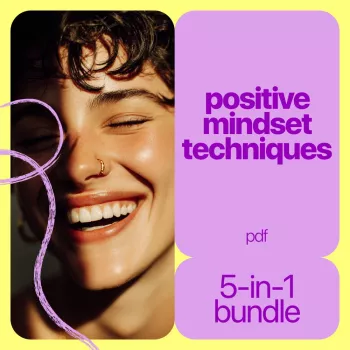
Positive Mindset Techniques Bundle: A 5-Part Daily Practice for Positivity, Self-Talk, and Personal Growth
A positive mindset is built through repeatable micro-habits: noticing thought patterns, choosing a helpful inner voice, and reinforcing progress with small wins. A structured bundle can make those steps easier by providing ready-to-use exercises and routines that fit into busy days and support steady personal growth—without requiring hours of journaling or a total life overhaul.
What “positive mindset” means in daily life
“Positive mindset” often gets misunderstood as forcing upbeat thoughts. In real life, it’s closer to a practical skill set: how attention is directed, how situations are interpreted, and how you choose to respond when things feel stressful.
- Positivity as a skill: Attention, interpretation, and response can be trained over time, much like strengthening a muscle through consistent reps.
- Healthy positivity vs. denial: The goal isn’t to pretend everything is fine; it’s to acknowledge stressors while choosing constructive next steps.
- Where self-talk fits: Inner narration shapes motivation, resilience, and follow-through—especially when confidence dips or a task feels overwhelming.
- Consistency matters more than intensity: Small practices repeated daily tend to stick better than occasional “big” breakthroughs.
Many of these ideas align with cognitive-behavioral approaches, which emphasize noticing thoughts and experimenting with more helpful interpretations over time. For background reading, the American Psychological Association (APA) overview of Cognitive Behavioral Therapy is a solid starting point.
Who this bundle supports best
A daily mindset download is most useful when it solves a specific, everyday friction point—like spiraling thoughts before work, harsh inner criticism after mistakes, or losing momentum on personal goals.
- Anyone who feels stuck in negative self-talk loops and wants replacement scripts that feel believable (not performative).
- People building a morning or evening routine who want simple, guided structure.
- Those focused on personal growth goals (confidence, boundaries, habits) and wanting daily reinforcement.
- Busy schedules: short practices that can be done in 5–15 minutes without extra tools.
What’s inside a 5-in-1 positive mindset practice (how the pieces work together)
A five-part approach works because it covers the full loop: catching the thought, softening the stress response, choosing a better inner voice, and then reinforcing progress so it becomes your new default.
- Technique 1: Awareness prompts to catch unhelpful thoughts before they spiral.
- Technique 2: Reframing exercises to create alternative interpretations that reduce stress and increase agency.
- Technique 3: Self-talk scripts that are specific and actionable (instead of vague affirmations).
- Technique 4: Gratitude and strengths routines that build a realistic sense of progress.
- Technique 5: Goal-aligned reflection to turn insights into next steps and maintain momentum.
How the five components can be used across a week
| Component | Daily time | When to use | Outcome to look for |
|---|---|---|---|
| Awareness prompts | 2–3 min | Morning or mid-day | Fewer automatic negative spirals |
| Reframing practice | 5 min | After a stress trigger | More balanced interpretations |
| Self-talk scripts | 2–5 min | Before hard tasks | Greater confidence and follow-through |
| Gratitude/strengths | 3–5 min | Evening | Improved mood and perspective |
| Goal reflection | 5–10 min | Weekly check-in | Clear priorities and next steps |
A simple daily routine (5–15 minutes) using the download
The easiest routine is one that fits your real day. Aim for short touchpoints that keep your mindset from drifting back into autopilot.
- Morning (2–5 min): Pick one prompt to set the tone; identify a likely challenge and choose a supportive self-talk line.
- Mid-day (2–3 min): Quick check-in—name the emotion, name the thought, choose a reframe.
- Evening (3–7 min): Gratitude/strengths entry plus one micro-win recorded for reinforcement.
- Weekly (10 min): Review patterns—what triggers negativity most, what self-talk works best, and what to practice next week.
If you want complementary practices alongside self-talk and reflection, mindfulness can be a helpful add-on. The National Institutes of Health (NCCIH) overview of meditation and mindfulness summarizes what’s known about effectiveness and safety.
Examples of practical self-talk shifts (that still feel natural)
Self-talk works best when it sounds like you—just slightly wiser and more supportive. These are small shifts designed to feel realistic, not forced.
For more on interrupting negative self-talk patterns, the Mayo Clinic’s guide to positive thinking and stopping negative self-talk offers practical framing.
How to get better results from mindset tools
Digital download details to check before buying
Product options for a more supported routine
- Positive Mindset Techniques Bundle | 5 in 1 Digital Download for Daily Positivity, Self-Talk & Personal Growth — a structured set of techniques designed for daily positivity, self-talk practice, and personal growth.
- Easy Cozy Dinner Kit with AI: 3-in-1 Bundle for Warm Dinners, Picky Eaters & AI-Suggested Recipes — helpful if stress makes meals feel like another decision to manage, and you want more “autopilot” support for weeknights.
- Smart Furniture Arrangements for Maximum Light | Digital Guide on How to Arrange Furniture for Better Lighting — a practical add-on if your environment feels dim or cluttered and you want a brighter, calmer home baseline.
FAQ
How fast can positive mindset techniques improve daily mood?
Small shifts can show up within days (like catching spirals sooner or recovering faster), while deeper habit changes usually take a few weeks of consistent practice. Tracking micro-wins helps you notice progress that’s easy to miss.
Do self-talk scripts work if affirmations feel fake?
Yes—when the script is believable and tied to a specific next action. Use “yet” language and test a few options, keeping the ones that reduce stress and improve follow-through.
How should a digital mindset download be used—printed or on a device?
Either works; the best choice is the one that removes friction. Digital is great for quick access and reminders, while printing can feel more focused and distraction-free—especially for weekly reviews.















Leave a comment